
Eagle Pass Criminal History Checks
Eagle Pass has three distinct starting points. Ask the Police Department for an incident or crash report created by its officers. Use Municipal Court for a city citation, Class C misdemeanor, traffic matter, or ordinance case. Move to Maverick County only when the event produced a county-jail booking, Class A or B misdemeanor filing, or felony case. This route keeps a police report, booking record, and court disposition from being mistaken for the same document.
- Identify whether Eagle Pass Police, another agency, or a court created the record.
- Request an EPPD report at the records counter or through the city's published request channels.
- Search Municipal Court by citation, license, vehicle, name, or business data when the case is within city jurisdiction.
- For custody or higher charges, contact the Maverick County jail and the correct county or district clerk.
- Use the Texas DPS public criminal-history product only when statewide reported conviction or deferred-adjudication data is needed.
No official Eagle Pass daily arrest blotter was found. The absence of a city search result may mean the record belongs to the Sheriff, Texas DPS, a federal agency, or a higher court. It can also mean a recent arrest has not yet become a filed cause.
Eagle Pass Police Report Requests
The Eagle Pass police-report instructions direct requesters to the department at 489 S. Monroe Street, Suite A. The nonemergency number is 830-773-9044, and the current city directory lists 830-773-6029 as the fax. The counter is listed for Monday through Friday from 8 a.m. to 5 p.m. Call first if faxing because an older incident-request PDF prints a different fax number.
The EPPD incident-request form asks for the request date, requester name and mailing address, signature, and identifying facts. Supply the report case number when known. The city also asks for enough detail from the incident date and involved person's name to locate the file. Older reports may require at least one week of archive research, and the department warns that some old material may no longer remain in its archive or database.
For records outside the routine report process, the city provides NextRequest. A focused request should name the agency, record type, event date or date range, case number if known, and whether inspection or an electronic copy is wanted. A city request does not retrieve a Maverick County booking sheet or the judgment in a county court case.
Records at the Eagle Pass Police Department
Eagle Pass Police keeps records created through its own operations. The city budget describes Administration and Communications as covering dispatch and police records, alongside Criminal Investigations and Patrol or Traffic. That structure helps explain why one event may yield several products, such as a dispatch entry, officer report, crash report, or investigative file. Ask for the exact item rather than requesting a broad “criminal history.”
The official Eagle Pass Police Department page is the city gateway for current department information. A requester can also call the counter before travel, especially when an archived file, body-camera recording, or other material may need review and redaction. Active investigations, juvenile data, protected victim information, and confidential identifiers may be withheld or redacted under Texas law.
Eagle Pass Police Department
489 S. Monroe St., Suite A
Eagle Pass, TX 78852
830-773-9044
Monday through Friday, 8 a.m. to 5 p.m.
Eagle Pass Police records stop at the city agency's role. A report can state an alleged offense and describe an officer's response, but the final filed charge and outcome belong to the court.
Eagle Pass Police Record Fees
Two Eagle Pass sources disagree on the routine report price. The current city instructions state that crash and incident reports cost $10, payable by cash, check, or money order. The older downloadable request form still says $8. The current webpage is the better indicator, but the conflict makes a phone check wise before sending payment. A clearance letter is listed at $30 and requires identification.
| Record service | Published amount | What to verify |
|---|---|---|
| Crash or incident report | $10 on current page | Confirm because the older PDF says $8 |
| Clearance letter | $30 | Bring or provide the identification EPPD requires |
| Archive research | No added amount published | Ask about time and any current copy cost |
Do not treat a payment as a search of every Eagle Pass criminal record. The service concerns the city document requested, and fees or methods can change after the research date.
Booking and Arrest Records in Eagle Pass
Eagle Pass advertises no separate city jail. When EPPD makes a custodial arrest, the normal trail is an Eagle Pass police report followed by a separate booking at the Sheriff Tom Bowles Maverick County Law Enforcement Center. The jail is at 1051 Balboa-Jones Memorial Boulevard and uses 830-773-2321 for the published Sheriff and jail line. No official public Maverick County roster or booking log was found, so a phone call and a focused records request are the local fallback.
An Eagle Pass arrest record shows allegations at the arrest stage. The booking file may add intake time, booking number, arresting agency, initial charge, bond, and release information. A later complaint, information, or indictment can alter the charge. Dismissal or acquittal does not by itself erase the city report or booking entry. The Maverick County arrest search process covers the full county route.
If the arrest was made by Texas DPS, a constable, tribal police, or a federal officer, begin with that agency rather than EPPD. Incident location alone does not identify the custodian. The citation, bond paper, or booking entry often names the agency and gives the best record number.
Eagle Pass Crime Record Context
The official 2024 Texas border crime report lists Eagle Pass Police as reporting all twelve months. It records 806 listed offenses for a reporting population of 28,323, a rate of 2,845.7 per 100,000. The same table shows 233 clearances, or 28.9 percent, and 227 arrests in the listed categories. These are agency reports, not court convictions, and a clearance can occur through arrest or an exceptional means.
The Eagle Pass total was about 19.6 percent lower than the 2023 total of 1,002. That comparison does not prove why the count changed or guarantee identical reporting practices. It also excludes Sheriff, DPS, tribal, and federal activity outside EPPD's reporting jurisdiction.
The FBI Crime Data Explorer provides an official interface for checking agency crime data.
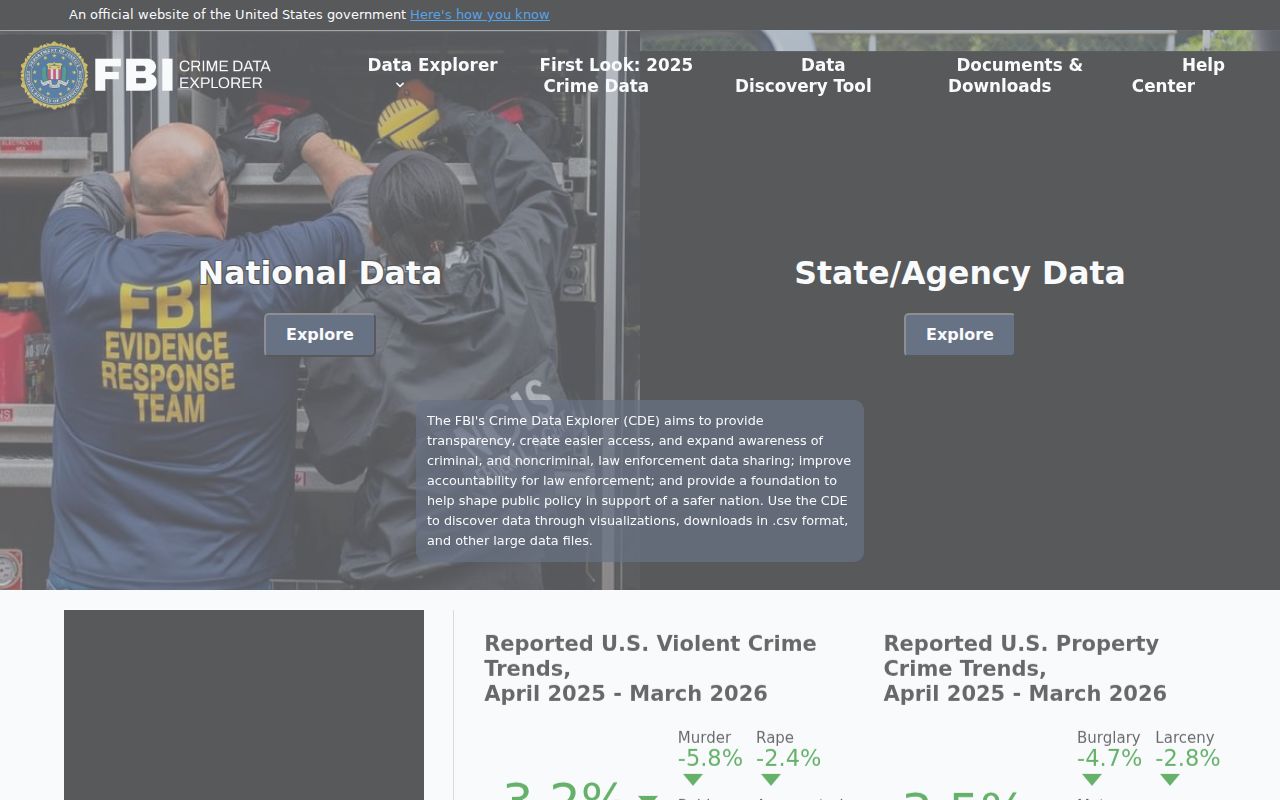
The image shows the data gateway, while the Texas DPS border report supplies the cited Eagle Pass figures and local reporting caveats.
The Eagle Pass Municipal Court File
Eagle Pass Municipal Court hears Class C fine-only offenses, traffic cases, and city ordinance matters. It does not hold ordinary Class A or B misdemeanors or felonies. The court is at 100 S. Monroe Street, can be reached at 830-421-5107 or municipalcourt@eaglepasstx.us, and lists Monday through Friday hours from 8 a.m. to 5 p.m.
| Court | Eagle Pass Municipal Court, 100 S. Monroe Street. |
|---|---|
| Case types | Class C fine-only charges, traffic matters, and city ordinance cases. |
| Search routes | Municipal citation portal, published docket PDFs, clerk counter, email, phone, and city records-request form. |
| Docket fields | Court date and time, judge, clerk, prosecutor, bailiff, status, docket number, charge, agency code, totals, and posting certification. |
| Copies and fees | No document-copy fee is posted on the city online request form; ask the clerk before ordering. |
A municipal citation result is only the city-court slice. County misdemeanors begin with the County Clerk, while the District Clerk keeps Eagle Pass felony cases filed in the 293rd or 365th District Court.
Eagle Pass Citation Record Searches
The Eagle Pass municipal citation portal allows a public search before sign-in. Six modes are available. Citation number works with date of birth. Driver's license uses the number, issuing state, and birth date. Vehicle mode takes plate number and state. Name mode asks for first name, last name, and birth date, while business mode uses the company name.
| Search mode | Fields | Best use |
|---|---|---|
| Citation | Citation number and date of birth | Known ticket |
| Driver's license | License number, state, and date of birth | Known license data |
| Vehicle | Plate number and state | Vehicle-linked citation |
| Name | First and last name plus date of birth | Person search with identifiers |
| Business | Business name | Business-related municipal matter |
| SSN | Social Security number and date of birth | Avoid when less sensitive data will work |
No amount is displayed until an eligible matter is selected. The portal is a citation and payment route, not a complete Eagle Pass criminal history search. For a filed document or certified copy, contact the court or use the city request form.
Eagle Pass Court Records Explained
The city's published court dockets are grouped by DPS, Police Department, Youth Diversion, Insurance, Code Enforcement, and show-cause calendars. A posted PDF may show the court date and time, judge, clerk, prosecutor, bailiff, status filter, docket number, status code, charge, agency code, totals, and a posting certification. It is a calendar snapshot, not a complete case history.
For copies, Eagle Pass offers a city online records-request form. It asks for the request date, requester or organization, address, phone, description, and whether the person wants to inspect records or receive copies. It also provides a copy count, electronic signature, and optional email-delivery choice. No fee or deadline appears on the form.
If a portal search returns nothing, retry with a more precise identifier, review the docket category, then ask the clerk to search. Move to a Maverick County clerk only if the charge falls outside municipal jurisdiction. This sequence avoids treating a blank city result as proof that no Eagle Pass event exists.
How Eagle Pass Records Reach the County
An EPPD event can stay at city level or move into the Maverick County system. A fine-only citation generally remains in Municipal Court. A custodial arrest can create a city police report and a separate county-jail booking. Class A or B charges route to the county-level court, while a felony proceeds through one of the district courts. After disposition, qualifying arrest and court data may be reported to the Texas Department of Public Safety.
Record flow: Eagle Pass Police Department › Maverick County jail and courts › Texas Department of Public Safety Crime Records Division
Use city records for the source incident and municipal matter. Use county clerks for filed higher charges and judgments. DPS provides the statewide public conviction and deferred-adjudication product, but it may not show a new local case, a dismissed arrest, or a municipal event. The broader Maverick County criminal-history overview maps those county and state channels in greater depth.
Eagle Pass Criminal Record Agency Trails
Eagle Pass faces Piedras Negras across the Rio Grande, and several agencies can work in the same region. City police, the Maverick County Sheriff and constables, Texas DPS, federal border agencies, Eagle Pass ISD Police, and tribal police may each create their own records. A border-related incident does not automatically create an EPPD report. A federal charge will not appear in the city court or Maverick County district docket.
Before filing a request, read the agency name on the citation, bond paper, report receipt, or booking document. Match that agency to the record type. EPPD holds its report. The county jail holds its booking record. The issuing court holds its warrant or case file. A federal custodian holds its own federal record. That one-minute routing check can prevent a week of calls to the wrong Eagle Pass office.
Note: The place of arrest, investigating agency, booking office, and filing court can all differ in a border-city case.
Eagle Pass Record Access Rules
City police records are subject to the Texas Public Information Act, but the law permits redaction or withholding for protected details and applicable law-enforcement exceptions. Municipal judicial records also follow court-access rules, so the Municipal Court clerk is the direct route for its case file. Ask for an existing record with a narrow date range and clear identifier. A public body need not create a new report to answer a question.
Key Texas authorities:
Government Code Chapter 552 gives access to existing public city records and sets the response and cost framework.
Government Code Chapter 411 limits criminal-history dissemination while allowing DPS to publish conviction and deferred-adjudication information.
Texas court access rules govern judicial files along with statutes, sealing orders, and sensitive-data redaction.
If Eagle Pass withholds part of a record, ask for the cited basis and any portion that can be released. Full Social Security numbers, financial account data, juvenile information, protected victim details, and sealed material should not appear in an ordinary public file.